The Weather Side of the Street: Picking Windows That Shrug Off Sea Air
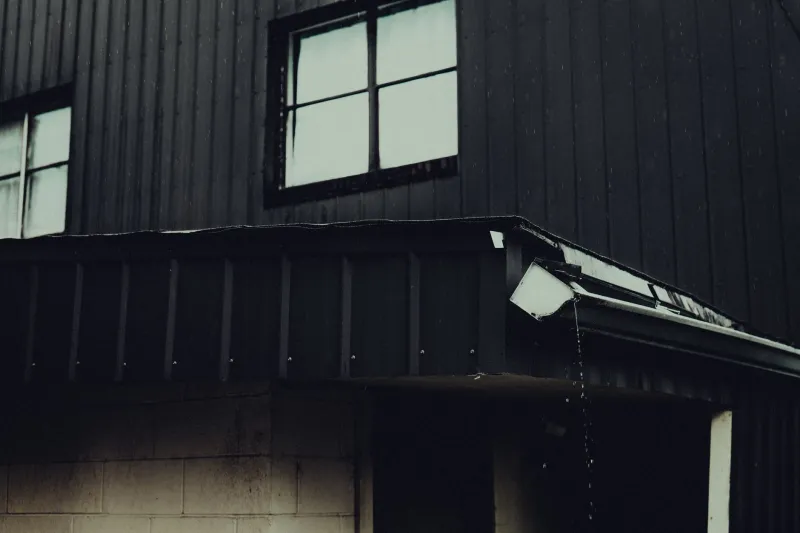
There's a reason the houses nearest the water cost more, and there's a reason their windows cost more too. Sea air is generous with views and stingy with everything else. If your home catches the prevailing wind — the sort of spot where the rain arrives sideways and the car windscreen is opaque with salt by Tuesday — the windows you choose and how you look after them matter far more than they would three streets inland.
This isn't a scare piece. Plenty of coastal windows do twenty-five years without a murmur. But those ones tend to share a few things in common, and most of them were decided before anyone signed on the dotted line.
The salt gets blamed for more than it does
Ask anyone about coastal windows and they'll say "salt". Fair enough — but salt on its own is mostly a slow cosmetic nuisance. Where it does real damage is when it sits on a surface and holds moisture against it, or when it dries into a crust that traps grit in a hinge or a sliding track. The abrasive, grinding quality of dried salt is underrated.
What really does the harm is the combination: salt deposits, persistent damp, and metal that wasn't asked to cope with either. The wind-driven rain is what drives the moisture into places it wouldn't otherwise reach, and salt is what keeps it there afterwards.
Wind-driven rain is the actual test
A normal British window is tested for watertightness against rain falling at a particular angle and pressure. On a sheltered inland plot that's a reasonable ask. On a wall that faces the estuary or the open sea, with nothing between you and the next landmass, the same window is being asked to do something it was never measured for.
So when you're comparing quotes, don't settle for the word "weatherproof". Ask for the classification numbers. Windows in the UK are classified under BS EN 12210 for resistance to wind load and BS EN 12208 for watertightness. Watertightness runs from class 1A up to 9A; wind load runs 1 to 5, with sub-classes A, B and C depending on how much deflection is allowed. A budget unit might scrape a class 3 or 4 for water. An exposed coastal elevation wants comfortably more than that, and the installer should be able to tell you exactly what the product achieves rather than waving at a brochure.
There's also the older BS 6375-1 exposure framing — sheltered, normal, severe, very severe — which some manufacturers still use to describe where a product is suitable. "Very severe" is not marketing hyperbole; it's the category for exactly the sort of site we're talking about.
Drainage: the water has to be going somewhere
Every well-made window is designed on the assumption that some water will get past the first line of defence. The outer seal is the bouncer, not the wall. Behind it there should be a drainage path — a rebate, a channel, a slot — that carries any water that sneaks in down and out through weep holes in the frame or the sill.
Three things go wrong here in coastal homes. The slots get blocked with salt, pollen and grit. The window is fitted slightly out of level, so water pools instead of draining. Or the design simply has no meaningful drainage, which is more common on cheap units than you'd like to think.
Stand in front of a window on a wet day and look at the bottom of the frame. Water sitting in the channel after the rain has stopped is a warning sign. So is a damp patch on the internal sill, or a faint tidemark on the plaster beneath it.
Hinges, handles and the corrosion conversation
This is where coastal windows are quietly won or lost. Frames get the attention; the hardware is what fails first.
Ask what corrosion grade the ironmongery carries under BS EN 1670. Grades run from 3 (moderate) through 4 (high) to 5 (very high). Grade 3 will see you right in most of the country. Right on the coast, grade 4 is the sensible minimum and 5 is not overkill on a directly exposed elevation. For stainless steel, 304 is the everyday grade and 316 is the marine one — worth asking about specifically, because the difference isn't visible once it's on the window.
On aluminium, the finish matters as much as the metal. Powder coating to a recognised seaside specification (the Qualicoat seaside class is the one to look for) or anodising to Qualanod standards with a decent film thickness will hold up far better than an unqualified finish. On timber, it's the coating system and the end grain that decide the outcome — and the end grain is where most factory finishes are thinnest.
What early trouble looks like
It rarely announces itself. The first signs are small and easy to dismiss:
- White, chalky bloom on an aluminium frame that doesn't wash off
- Rusty streaks weeping from under a handle or a hinge screw
- A hinge that has stiffened over a winter and no longer moves freely
- Black spotting on rubber gaskets that doesn't wipe away
- A sealed unit that mists between the panes — that one means the seal has gone and the unit needs replacing, not repairing
- Paint lifting at the bottom rail of a timber sash, where water sits
Catch any of these early and you're usually talking about cleaning, lubrication or a touch-up. Leave them two or three winters and you're talking about replacement parts, or in the worst case, the window.
A routine that takes an afternoon, twice a year
Nothing elaborate. Twice a year — say April and October — do these four things:
- Rinse the frames with fresh water. A hose on a low setting, working from the top down, lifts the salt off before it can crust. This is genuinely the single most useful thing you can do.
- Clear the drainage slots. A soft brush or a cocktail stick. Don't poke anything metal down there.
- Lubricate the moving parts. A silicone or PTFE spray on hinges, espagnolette mechanisms and sliding tracks. Avoid general-purpose oils — they attract grit and hold it.
- Look at the seals. Run a finger along the gaskets on the weather side. If they're hard, cracked or pulling away, they've stopped doing their job.
And once a year, ideally in autumn before the storms, take a look at the outside of the sealed units and the frame joints from ground level with binoculars if you have to. Water staining on the glass near the edge of a unit is an early hint that the perimeter seal is on its way out.
Questions worth asking before you sign
An installer who knows coastal work will answer these without blinking. One who doesn't will start talking about something else.
- What wind load and watertightness classes do these units achieve? Can I see the test certification?
- What BS EN 1670 grade is the hardware, and is the stainless 304 or 316?
- How does water drain out of the frame, and where are the outlets?
- What does the coating warranty actually cover, and does it change for coastal locations?
- Are the fixing screws and any wall anchors stainless or coated steel?
That last one catches people out. You can buy a perfectly good window and have it bolted in with fixings that rust through in six years.
Sea air is part of the deal when you live here, and nobody's suggesting otherwise. But a window that's been specified for the site, fitted level, and given a rinse twice a year will quietly get on with the job for decades. It's the ones chosen purely on price that end up reminding you where you live.