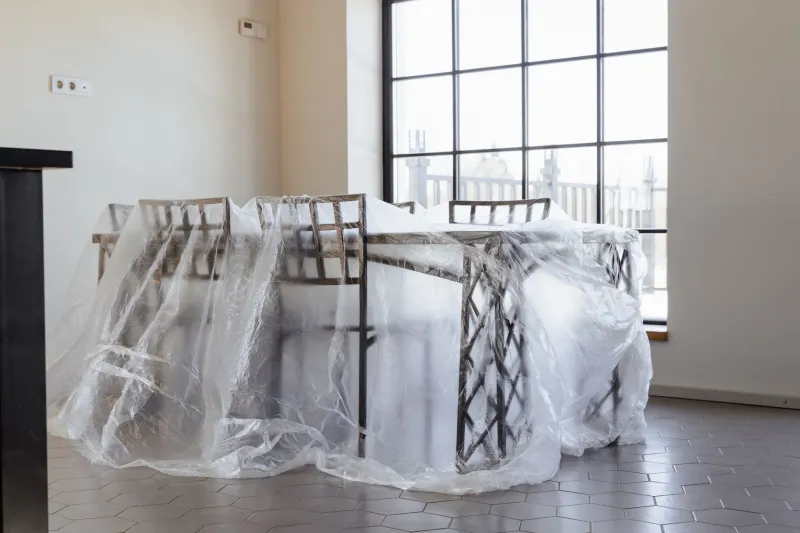
The Curtain Pole Doesn't Know You're Getting New Windows
New windows are one of those jobs we tend to talk about from the outside. Frame colour, glass units, seals, energy ratings, how the front of the house will look from the street. All important. But on the day the old frames come out, the room inside can shift in small ways too — and those small ways have a habit of affecting curtains, blinds, shutters and that settee you have finally got into the right spot.
None of this is a reason to worry. It is just a reason to measure a few things before the order is signed, rather than discovering them with a cup of tea in one hand and a curtain pole in the other.
Start with the things you touch every day
Handles are the obvious one. A new handle may sit at a slightly different height, project further into the room, or work in a different way. If you have a tilt-and-turn window, part of the frame opens inwards, so the handle and sash need clear space. That matters if there is a desk, a sofa arm or a radiator sitting close by.
Ask your supplier for the handle height and how far it stands proud of the frame. Then look at what is in front of the window now. A few centimetres can be the difference between a clear opening and a handle that taps the back of a chair every time you open it.
The reveal is the bit nobody warns you about
The reveal is the internal recess between the wall face and the window frame. New frames can be slimmer, deeper or set at a slightly different position from the old ones. That changes how much room you have around the glass — and it can change how curtains fall, how blinds fit and whether existing shutters will mount in the same way.
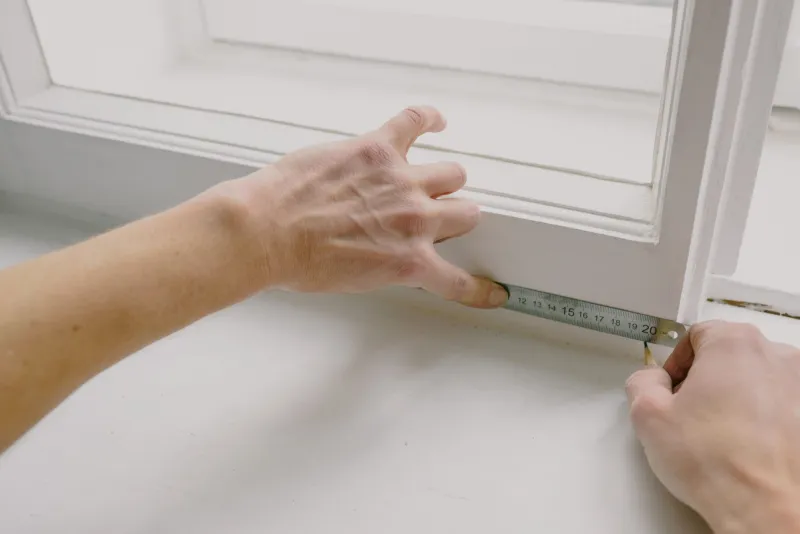
Measure the current reveal depth at the top, middle and bottom of each window. Old houses are rarely perfectly square, and St Clement homes are no exception. Then ask what the finished reveal is expected to be. If the fitters are making good plaster around the frame, that can change the picture again.
If you have bespoke shutters, do not assume they will transfer neatly to a new frame. Share the shutter details with the window company before the order goes in. It is much easier to plan a new mounting position than to explain to a joiner why the old ones no longer close.
Cills are not just a ledge for a plant
The internal cill — sometimes called the window board — can end up deeper or at a slightly different height. A deeper cill is often a lovely thing. It gives you somewhere to put a pot, a candle or the Christmas cards. But it can also push curtains outward or make a blind sit further into the room.
Measure from the floor to the top of the cill, and measure the cill depth. Note anything that relies on that space: radiators, desks, bedside tables, window seats. If a new cill is going to be deeper, your curtain drop may need adjusting. If it is going to be higher, a piece of furniture that used to tuck underneath may no longer fit.
This is also the moment to think about radiators. You do not want a new deeper cill pushing a curtain into a radiator so that heat gathers behind the fabric. A little planning now keeps the room comfortable later.
The favourite curtain pole problem
Curtain poles are often fixed in exactly the right spot after years of trial and error. Then a new window arrives and the bracket sits where the frame or reveal now wants to be. Sometimes the pole can stay. Sometimes it needs to move out, up or along. Occasionally it needs a different bracket altogether.
Before the fitters come, take a photo of the pole, the brackets and the wall behind them. Measure the height of the pole and how far it sits from the wall. If the new frame has a deeper reveal, the pole may need to move forward. If the pole is close to the ceiling, moving it up may not be an option, so a ceiling-fixed track might be worth discussing.
Blinds have their own version of this. A blind fitted inside the recess needs a certain depth and a clear top fixing. A blind fitted outside the recess needs room for the cassette or headrail. Roman blinds, roller blinds and venetian blinds all ask slightly different questions of the window. If you are replacing the glazing and keeping the blind, check the fit before the old window goes.
Do not block the trickle vents
Trickle vents are easy to ignore because they are small and quiet. They are also doing a job. If a new window has vents in the head of the frame, curtains, blinds or a pelmet should not cover them. Air needs to move through.
This is a common own goal in a newly sealed room: the vents are fitted, then a full-length curtain is hung right across them because that is where the pole has always been. If you use vents to keep condensation in check, leave them clear. If your curtain arrangement makes that impossible, talk to your fitter about the vent position before the windows are made.
A simple measuring evening
You do not need a clipboard and a hi-vis jacket. You need a tape measure, a pencil and twenty minutes per room. Jot down the current reveal depth, cill height and depth, handle height, curtain pole or track position, blind type and fixing, and the location of any trickle vents. Take a few photos with the tape measure visible.
Then ask the window company for the finished dimensions and a technical drawing. If you have shutters or made-to-measure blinds, pass the details on. A decent surveyor will be happy to look at the whole room, not just the hole in the wall.
The room after the fitters leave
New windows should make a room feel calmer, warmer and easier to live in. A little measuring beforehand means the curtain pole can stay where it belongs, the blind can still open, and the handle does not introduce itself to the furniture. It is a small bit of homework, but it is the sort that saves a frustrating afternoon later.