The Window That Has to Do Two Jobs: Escape Routes, Restrictors and Safety Glass in St Clement Homes
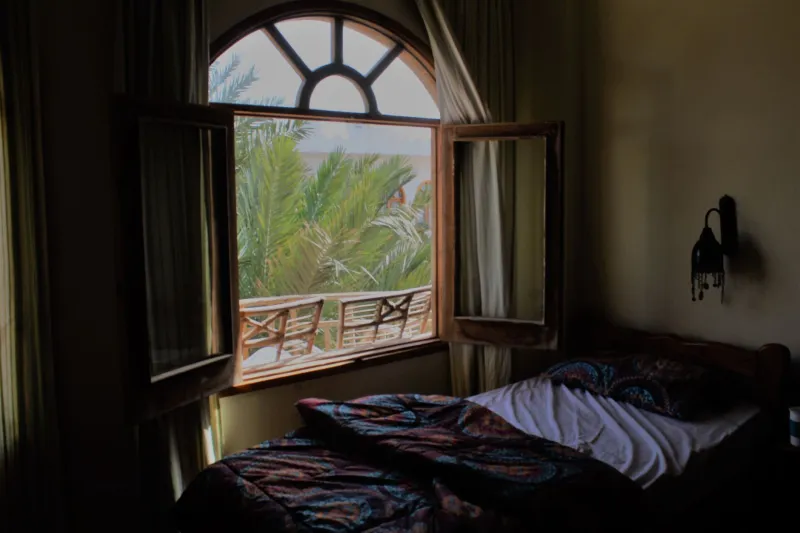
When you are choosing new windows, the brochure talks about U-values, colours and handles. It rarely talks about the one thing that could matter on a bad night: whether you can get out of the window. That is not a gloomy subject for the sake of it. It is part of the Building Regulations, and it is something worth checking before the old frames go in the skip.
An upstairs window is often a second way out
In a typical two-storey St Clement home, the stairs are the main escape route. If they are blocked by smoke, an upstairs bedroom window becomes the backup. Older windows often opened wide because they were simple casements or sliders with plenty of travel. A modern replacement can be tighter, heavier and fitted with a restrictor, so the opening that was there before can quietly disappear.
Building Regulations call this an escape window, or egress window. You do not need to memorise the term. You just need to make sure your replacement does not turn a usable exit into a letterbox.
What the rules ask for, in plain English
In England, Approved Document B deals with fire safety in dwellings. For a typical two-storey house, it expects habitable upper-floor rooms to have a window that can be used as an escape. The clear opening is usually at least 0.33 square metres, with no dimension less than 450mm, and the bottom of the opening no more than 1100mm above the floor. Some properties have different arrangements, and a building control officer has the final say, so treat those numbers as a starting point rather than a DIY exam.
Approved Document K covers protection from falling and impact. That is where safety glass comes in. Replacement windows also need to meet Part L for energy efficiency and Part F for ventilation, but those are the parts most quotes mention. Parts B and K are the ones that tend to get lost in the conversation.
Restrictors are good. Restrictors on escape windows need a plan.
Window restrictors are a sensible piece of kit. They limit how far a window opens, usually to around 100mm, which makes it much harder for a small child to climb out or for someone to fall through. On a landing window, a bathroom window or a bedroom window that is not the designated escape, they are a straightforward safety win.
The trouble starts when a restrictor is fitted to the one window you might need in a hurry. A fixed restrictor with a lost key is a problem. A restrictor that needs a screwdriver is a problem. A restrictor that everyone in the house has forgotten about is a problem. If a restrictor is fitted to an escape window, it should have a quick-release mechanism that an adult can operate without tools, and everyone old enough to be left in the house should know how it works.
Ask for the release to be demonstrated on installation day. Not explained. Demonstrated. Then try it yourself while the fitter is still there.
Where safety glass belongs
Safety glass is not just for patio doors. It matters wherever someone could fall against a pane or where broken glass could cause a serious injury. In a typical home that means low-level window panes, glazed doors, side panels next to doors, and glass in conservatories or garden rooms. The critical measurement is usually the height of the glass above the floor, but the simplest approach is to ask your installer which panes are in a critical location and to see the marking.
Toughened glass usually carries a small mark, often in a corner. Laminated glass is marked too. If you are looking at an older window and cannot find a mark, do not assume it is safe. Ask. Safety film can reduce the risk of flying glass, but it is not the same as a properly specified safety pane.
A five-minute check before you sign
Before you order, walk around the upstairs rooms and do this:
- Open each window as far as it will go. If it sticks, force nothing; note it.
- Measure the clear opening. Width and height, not the frame size.
- Check whether a restrictor is fitted and whether the release works.
- Look for furniture, beds or deep sills that would block a climb-out.
- Find the keys, if there are any.
- Look for glass markings on low panes.
- Ask the installer to identify the escape windows on the quote.
Take photographs. They are useful if the conversation gets vague later.
The ventilation question
Restrictors and ventilation are not enemies, but they are not the same thing. A trickle vent provides background ventilation with the window shut. A restrictor limits how far the sash opens. If you rely on opening windows for a quick purge of steam or summer heat, a 100mm gap may not be enough. That is why it is worth having a mix: restrictors on windows where child safety is the priority, and a properly releasable restrictor or egress hinge on the window that doubles as the escape route.
Egress hinges are worth asking about. They allow the window to open fully for escape but can be set to restrict normal opening. They are not a universal answer, and they need to be fitted correctly, but they are a useful middle ground.
What to ask your installer
Ask three questions in writing. Which upstairs windows are being treated as escape windows? What is the clear opening of each one? And which panes are being supplied as safety glass? A good installer will answer without huffing. A vague answer is not a red flag on its own, but it is a reason to slow down.
None of this is about turning your home into a fortress. It is about making sure the window that lets the light in can still let you out, and that the glass between you and the garden is the right sort if someone falls against it. In St Clement, on a street of older houses and newer replacements, that is the sort of detail worth getting right before the scaffolding goes up.